The Hidden Hurdles of Advanced Chip Manufacturing
advertisement
Beyond the polished gadgets we interact with every day exists a realm of minute accuracy, where the production of sophisticated chips necessitates more than merely state-of-the-art technology—it demands a careful equilibrium of scientific principles, engineering practices, and coordination of resources. For those who appreciate high-performing technology, grasping the reasons behind the manufacturing difficulties of these minuscule powerhouses unveils the true extent of human creativity and its boundaries.

Ultra-Pure Materials: The Hidden Foundation
Sophisticated chips depend on silicon wafers exhibiting purity levels of 11 nines—99.999999999%—indicating that impurities are restricted to merely one part per trillion. The presence of even a single particle of dust can compromise a chip’s functionality, and achieving such ultra-pure silicon necessitates specialized production facilities which are financially unfeasible for many countries, with the global market largely controlled by a select few companies.
EUV Lithography: Precision Beyond Imagination
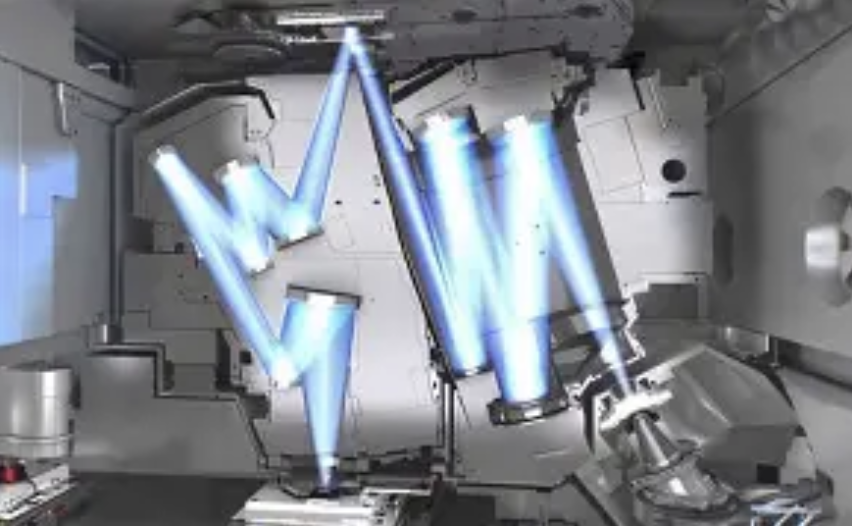
Extreme Ultraviolet (EUV) lithography, crucial for nodes of 7nm or smaller, employs light at a wavelength of 13.5 nanometers to engrave circuits. The apparatus generating this light features mirrors finely polished to a flatness deviation of under 0.1 nanometers—thinner than a solitary atom—with only one entity in the world capable of mass manufacturing these machines.
Advanced Packaging: Bridging the Interconnect Gap
As transistors become smaller, establishing effective connections between them turns increasingly challenging. Conventional wiring struggles to match the speed of signals, thus advanced packaging techniques such as CoWoS and 3D stacking become necessary. This process includes meticulously layering chiplets (smaller chip components), which involves addressing issues related to heat dissipation and signal interference.
Design Costs: A Billion-Dollar Barrier
The expenditure for designing a 2nm chip approximates $725 million—25 times the cost of developing a 65nm chip. Transitioning from planar transistors to FinFET and GAA architectures has complicated the design process significantly, necessitating a workforce of thousands of engineers to test and verify every detail, placing such initiatives beyond the capabilities of all but the largest enterprises.
Yield Control: Fighting Microscopic Flaws
A 3nm chip consists of over 280 lithography layers, where even a minor discrepancy in a single layer can spoil the entire wafer. Yield rates for advanced nodes frequently commence below 50%, meaning that 50% of all manufactured chips are discarded. Enhancing yield involves continuous modifications to temperature, humidity, and processing parameters, a burdensome and lengthy process.
Talent Shortage: The Human Bottleneck
An experienced process engineer requires between 4 to 8 years of training, and the sector is currently encountering a significant absence of such skilled professionals. These specialists must gain mastery in chemistry, physics, and engineering, and their knowledge is irreplaceable—even with the advent of advanced AI, human insight is still crucial for resolving intricate manufacturing challenges.

For users of premium technology, the scarcity of advanced chips transcends mere supply complications—it highlights the exceptional obstacles in converting microscopic concepts into practical technology. Each high-performing device we utilize embodies the triumph over these underlying challenges, rendering their production one of humanity's most remarkable engineering accomplishments.
(Writer:Tommy)
Related Articles
